Water Conservation




Recent Highlights
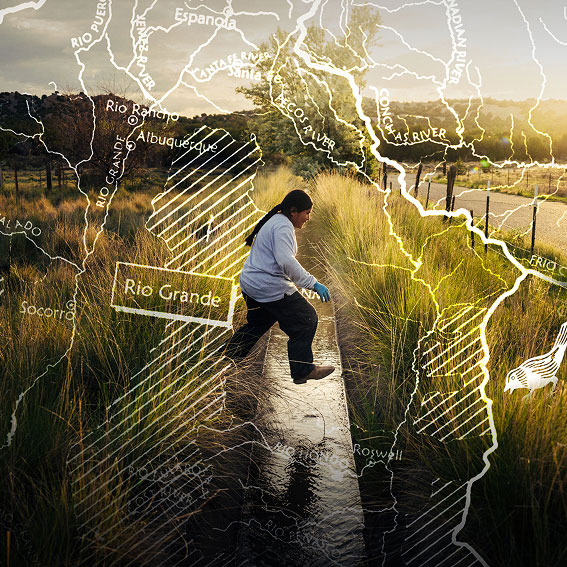
A1: Main Stream New Mexico Regional Water Planning Campaign
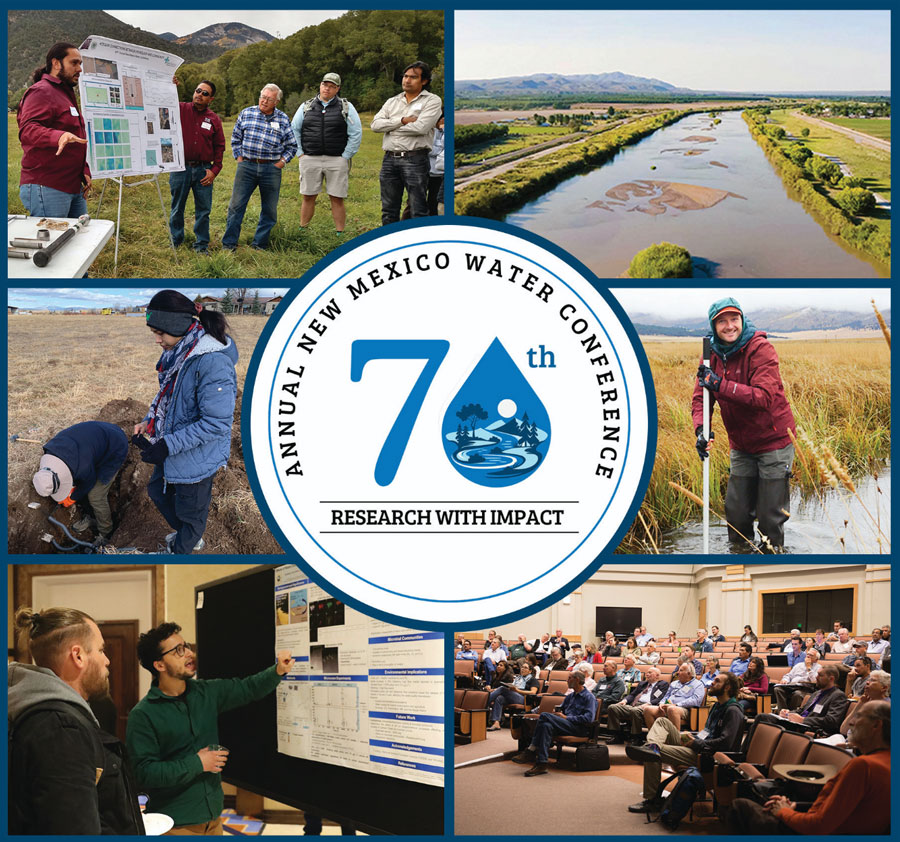
A2: NMSU Holds 70th New Mexico Annual Water Conference
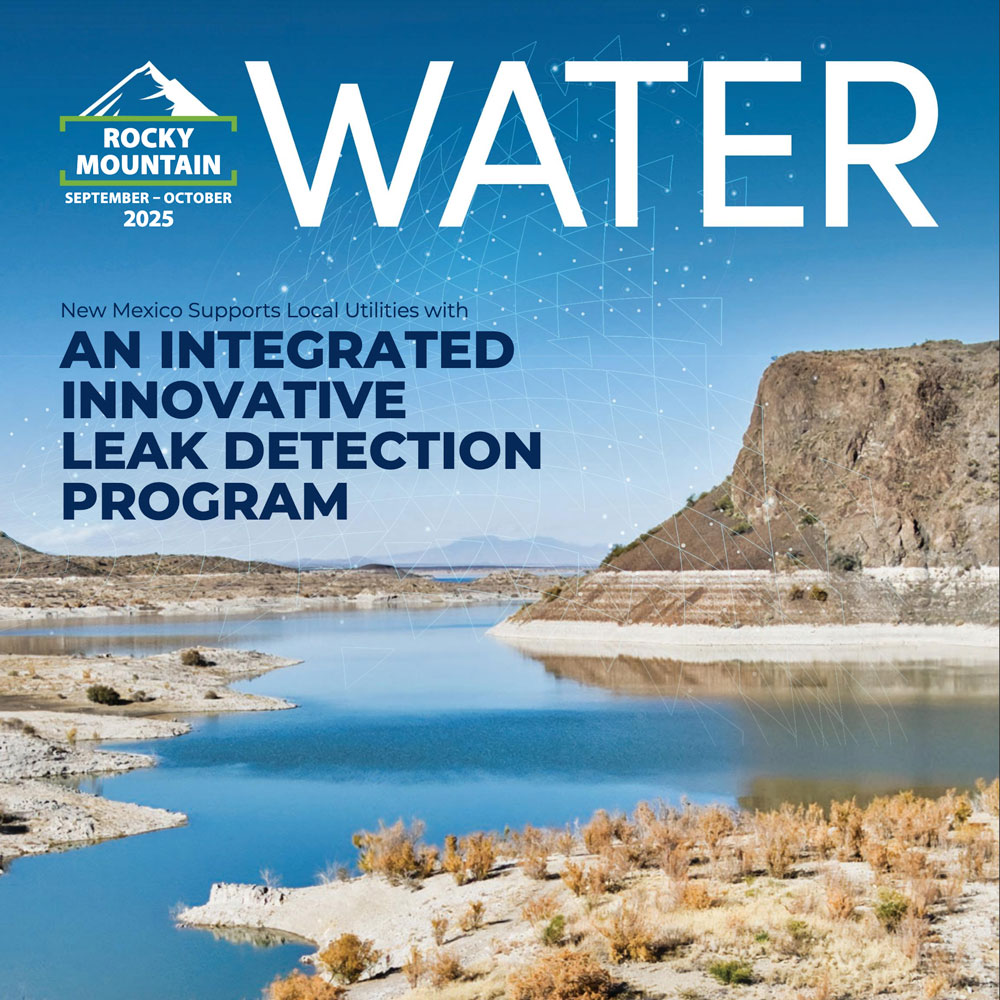
A3: New Mexico Supports Local Utilities with an Integrated Innovative Leak Detection Program
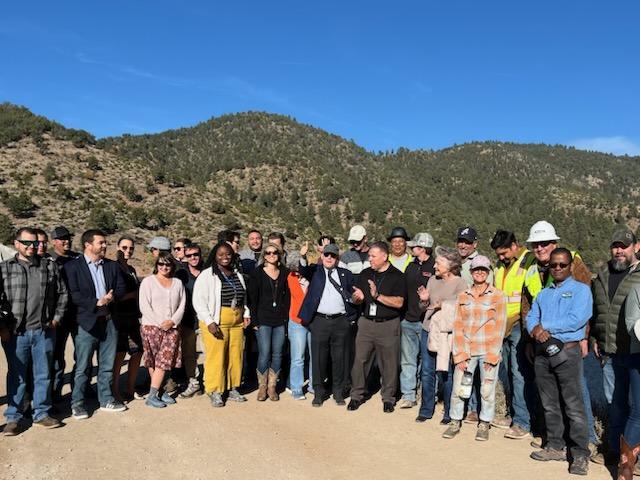
A4: Nichols Dam Rehabilitation Project
A1: Develop a water education campaign
A1: The ROI Goal
A1: Progress
A1: Water Education Timeline
Fall 2024
Spring 2026
2040




General public education efforts contributing to A1 goals include:
- Development of Main Stream New Mexico - a public education and conservation campaign from the New Mexico Interstate Stream Commission Water Planning Bureau.
- New Mexico Tech’s Water Leaders Program
- NMSU Water Resources Research Institute conference - 2025 marked the 70th annual conference
- Implementation of New Mexico's Water Data Act
K-12 public school education efforts contributing to A1 goals include:
- Expansion of the Project WET curriculum for use in New Mexico public schools
- Improve state agency coordination to ensure water education is included in STEM education standards
- Partnership with the U.S. Geological Survey's (USGS) Water Science School program
Water workforce development efforts contributing to A1 goals include:
Regional water planning efforts contributing to A1 goals include:
- In 2026, the Interstate Stream Commission adopted a rule to guide implementation of the Water Security Planning Act and begin updated regional planning efforts throughout New Mexico.

A2: Incentivize agricultural water conservation
A2: The ROI Goal
A2: Progress
A2: Agricultural Water Conservation Timeline
2025
July 2025
November 2025
January 2026
2035
2050
NM WRRI Agricultural Water Resilience Program (AgWRP)
The NM WRRI Agricultural Water Resilience Program (AgWRP) implements Action A2 to incentivize agricultural water conservation, part of the New Mexico 50-Year Water Action Plan. AgWRP was funded for FY26 by the NM Legislature to “improve farmers’ and ranchers’ ability to manage, save, and efficiently apply limited water resources for agricultural production”.
NM WRRI Program Appropriation
A total FY26 budget of $5M
- $4.5M for on-the-ground projects with a maximum of $250K per project
- $500,000 for program implementation and water impact assessment
A total FY27 budget of $10M
About The New Mexico Water Resources Research Institute (NM WRRI)
The New Mexico Water Resources Research Institute, established at New Mexico State University in 1963, funds student and faculty research conducted to address water problems critical to New Mexico and the Southwest. NM WRRI also participates in joint efforts to solve water-related problems along the U.S./Mexico border.




Major Agricultural Water Resilience Approaches
A3: Reduce leaks in drinking water infrastructure and increase municipal conservation
A3: The ROI Goal
A3: Progress
A3: Municipal Leak Detection Timeline
2024
2025
October 2025
July 2026
2040
NMED's LeakTracer program's goal is to identify potable water supply leaks for over 650 small and rural public water utilities in the state by the end of the 4 year contract with Asterra. Once a leak is found, NMED's Rural Infrastructure Program is providing funding to utilities for repairs. To date, NMED has identified leaks totalling 289 million gallons per year.
During the first twelve months of the program, NMED provided leak detection services to small rural communities across the state. ASTERRA captured 20 satellite images to identify likely leak locations. NMED reached out to the over 150 utilities where areas of interest were identified; 43 have responded and signed up for the program. Thus far, NMED's contractor has physically inspected 20 utility service areas for leaks using the data collected by the satellite images and found 170 leaks. The leak loss rates are estimated to total approximately 550 gallons per minute. This equates to 792,000 gallons per day or 289 million gallons per year of water loss reduction when all leaks are repaired. Based on an average cost of water production, this equates to a net savings of $446,000 to these agencies. If this loss-recovered water was sold, the additional revenue to the affected utilities would be almost $2.7 million.
Did you know?
The 2020 New Mexico Water Use By Categories Report estimates that public water use accounts for 7.88% of the state’s total water withdrawals of 299,803 acre feet.

A4: Improve water storage and delivery systems
A4: The ROI Goal
A4: Progress
A4: System Conservation Timeline
2025
2026
2040
Through a cooperative agreement with the Middle Rio Grande Conservancy District (MRGCD) on bosque management and vegetation removal, the New Mexico Interstate Stream Commission (ISC) has initiated a $5M funding agreement. To date, ~$3M has been expended.
In FY26, approximately 300 acres of bosque were treated, which included:
- clearing of dead and downed trees in areas burned by fire
- thinning and removal of salt cedar and non-native vegetation
- conversion to open grasses
- re-treatment of previously cleared areas
ISC funding also enabled MRGCD to purchase specialized heavy equipment needed for vegetation removal. These efforts significantly reduce wildfire risks while enhancing the ability for emergency responders to access the bosque, when fires do occur. Invasive species removal also allows for the return of a mosaic of native grasses, trees, and shrubs, which increases the resiliency of the bosque ecosystem.
The funding also provided for the hiring and training of the next generation of conservation practitioners through the Rocky Mountain Youth Corps to support vegetation management and monitoring activities. Finally, ISC funding has provided MRGCD leverage for $1M in State Forestry funding for large-scale fire mitigation and treatment projects.
The New Mexico Interstate Stream Commission (ISC), Reclamation, Middle Rio Grande Conservancy District (MRGCD), and the National Fish and Wildlife Foundation (NFWF), work in partnership on a conservation program that includes fallowing of farmlands and implementation of conservation actions that generate water savings to be used for species’ benefits.
In FY27, several water sources and types of fallowing are included in the program, resulting in 2,979 equivalent acres enrolled. Through July 2026, this has resulted in 2,423 acre feet of water generated for use and 1,377 acre feet used to support habitat for fish and wildlife at several sites along the river.
The Los Lunas Silvery Minnow Refugium (LLSMR or Refugium) is operated to support propagation of the endangered Rio Grande Silvery Minnow. The Refugium operations include spawning, egg collection from the river, hatching, and the grow out of fish for eventual release to the river.
In FY27, approximately 40,000 minnows are on station at the refugium as of July, the majority of which will be released to the river in the fall of 2026 and some of which will be retained for future spawning.
The New Mexico Interstate Stream Commission's (ISC) Middle Rio Grande Bureau is coordinating with the U.S. Bureau of Reclamation on several projects in the basin to improve water and sediment conveyance. Notable projects in FY27 include:
Funding from Reclamation for a Rio Chama watershed evaluation of:
- the risks from the impacts from wildfire and monsoon/flood events to the increasingly erosive and degraded watershed based on existing data and models for the area
- methods to enable water to move through the system at a range of flows – from high flow monsoon/flood events to low flows during lower water supply conditions.
The assessment will be coordinated with key agencies and stakeholders. ISC expects to enter into a contract for the assessment in FY27.
Development of a long-term pre- and post-construction monitoring and maintenance program with Reclamation and the Middle Rio Grande Conservancy District for major projects. By coordinating and leveraging resources, this will reduce duplicative efforts and ensure that areas of the river key to major projects have adequate monitoring coverage.
Coordination with Reclamation on a large channel improvement project at RM 161 in Los Lunas to widen the channel through the removal of several islands and bars that have formed in the channel. ISC expects to enter into a contract in FY27 for the environmental compliance required by the National Environmental Policy Act.
Coordination on a major river channel realignment in the Elephant Butte delta that will improve water and sediment conveyance and reduce depletions caused by evapotranspiration from ponding and slow-moving water. ISC and Reclamation are partnering on the alignment path, preliminary design, and the sediment conveyance analysis in FY27.
Habitat restoration of several site in the Albuquerque Reach, which includes the removal or destabilization of islands and bars for sediment management and channel widening and removal of invasive vegetation. FY27 activities include construction of projects that can be funded in full by the Water Trust Board.
Recent actions in the Lower Rio Grande provide a great example of efforts to improve system efficiencies to meet water conservation goals.
- Distribution Efficiency, Stormwater Management and Aquifer Recharge – The OSE/ISC is working with Elephant Butte Irrigation District to increase system efficiencies. Identifying opportunities for stormwater capture and managed aquifer recharge.
- $13 million will support infrastructure improvements with the potential to capture thousands of acre-feet per year
- Brackish Water Development – Investigating viability of brackish water development opportunities.
- $6 million will support exploratory wells in Doña Ana County
- Groundwater Conservation – Collective efforts to reduce groundwater pumping through short-term voluntary leases:
- Nichols Dam, Santa Fe County – Complete (2025)
- McClure Dam, Santa Fe County – Under investigation and design
- Santa Cruz Site 1 Dam, Rio Arriba County – Under design (NRCS)
- Power Lake Dam, Guadalupe County – In construction
- Bear Canyon Dam, Grant County – Construction on hold (high bid)
- Peterson Dam, San Miguel County – In design
- Cimarroncito Dam, Colfax County – Under design
- Alto Lake Dam, Lincoln County – In planning
- Zuber Draw Sites 1 & 2 Dams, Chaves County – Under design (NRCS)
Litigated Claims
- Mescalero Apache in the Rio Hondo/Pecos River Stream System (State ex rel. Reynolds v. Lewis, 116 N.M. 194 (Ct. App. 1993))
Finalized & Funded Water Rights Settlements
- Jicarilla Apache in the San Juan River Basin & the Rio Chama Stream System
- Navajo Nation in the San Juan River Basin
- The four Pueblos of Nambé, Pojoaque, Tesuque, and San Ildefonso in the Rio Pojoaque Basin adjudication
- Taos Pueblo in the Rio Pueblo de Taos/Rio Hondo Stream System adjudication
Local Settlements Seeking Congressional Confirmation
- Acoma and Laguna in the Rio San José Stream System
- Jemez and Zia in the Rio Jemez Stream System
- Ohkay Owingeh in the Rio Chama Stream System
- Navajo Nation in the Rio San José Stream System
- Zuni Indian Tribe in the Zuni River Stream System, and Zuni Salt Lake Protection
- Amendment to Taos Pueblo-Abeyta Settlement Act for Supplemental Funding
Settlements Currently Under Negotiation
- Santa Clara Pueblo & Ohkay Owingeh in the Santa Cruz/Truchas Stream Systems
- Navajo Nation in the Zuni River Basin
- Ute Mountain Ute Tribe in the San Juan River Basin
- The Six Pueblos of Sandia, Santa Ana, Isleta, Santo Domingo (Kewa), Cochiti, and San Felipe in the Middle Rio Grande Stream System
Immediate Next Steps
Putting The Plan Into Action
A2: Incentivize
Agricultural Conservation
State agencies are coordinating to deliver public education resources to classrooms through STEM education standards and are developing additional water-specific programs for schools. Expanded partnerships with Project WET and other programs will reach more students in future years.
The Public Education Department completed its review of potential water education elements to add to New Mexico public school programs in response to SM 1 (2025)
Outreach for agricultural water conservation programs in New Mexico has included:
- 2024 Agricultural Water Conservation Roundtable
- 2024 & 2025 WRRI Conference
- 2024 New Mexico Soil Health and Soil Carbon Conference
Advocacy for increased funding for agricultural water conservation in New Mexio has resulted in over $50 million in investments to support agricultural resiliency programs:
- Federal funding for ISC/ Rio Grande work
- Funding for acequia programs
- MRGCD conservation program
- Implementation of NM WRRI's Agricultural Water Resilience Program
- NMDA implementation of Land of Enchantment Legacy Fund programs, including Healthy Soil Program
Outreach relating to New Mexico regional water planning in 2025 has included:
- The Water Security Planning Act (WSPA) rulemaking process, which was completed in Spring 2026.
- Formation of the Lower Rio Grande Water Alliance
- Mainstreamnm.org continues to provide broad information to the public regarding ways to increase water resiliency and preserve local economies
In 2024, the New Mexico Environment Department (NMED), Google Public Sector, and Woolpert Digital Innovations announced Hydro Delta, a new initiative that leverages satellites and artificial intelligence to identify water leaks, often located underground.
Learn more about the Hydro Delta leak tracking initiative in this video.
State agencies are coordinating to deliver public education resources to classrooms through STEM education standards and are developing additional water-specific programs for schools. Expanded partnerships with Project WET and other programs will reach more students in future years.
The Public Education Department completed its review of potential water education elements to add to New Mexico public school programs in response to SM 1 (2025)
Outreach for agricultural water conservation programs in New Mexico has included:
- 2024 Agricultural Water Conservation Roundtable
- 2024 & 2025 WRRI Conference
- 2024 New Mexico Soil Health and Soil Carbon Conference
Advocacy for increased funding for agricultural water conservation in New Mexio has resulted in over $50 million in investments to support agricultural resiliency programs:
- Federal funding for ISC/ Rio Grande work
- Funding for acequia programs
- MRGCD conservation program
- Implementation of NM WRRI's Agricultural Water Resilience Program
- NMDA implementation of Land of Enchantment Legacy Fund programs, including Healthy Soil Program
Outreach relating to New Mexico regional water planning in 2025 has included:
- The Water Security Planning Act (WSPA) rulemaking process, which was completed in Spring 2026.
- Formation of the Lower Rio Grande Water Alliance
- Mainstreamnm.org continues to provide broad information to the public regarding ways to increase water resiliency and preserve local economies
In 2024, the New Mexico Environment Department (NMED), Google Public Sector, and Woolpert Digital Innovations announced Hydro Delta, a new initiative that leverages satellites and artificial intelligence to identify water leaks, often located underground.
Learn more about the Hydro Delta leak tracking initiative in this video.